
You know the door.
Maybe you walked into a bank with a real farm, a real business, and years of experience. You walked out without a loan. Or maybe you never went in.
The local lender was faster. The microfinance officer already knew your area. The money arrived before the seed, feed, or fertilizer bill was due. Then repayment started eating into the margin you worked all season to create.
Here is the part many small agri entrepreneurs are never clearly told:
You are not too small to be funded. You are just invisible to be assessed.
And you can start fixing that in one season.
Table of Contents
Why Most Farmers Can’t Get the Money
Smallholders make up the large majority of Bangladesh’s farming community. Yet formal bank credit still reaches only a minority of them. One Bangladesh survey reported bank-loan access at roughly 17% among smallholders. In simple terms, that is around one in six.
That does not mean the other five are bad farmers.
Many grow crops, manage ponds, raise livestock, buy inputs, hire workers, and sell into real markets. Their businesses move money every month. The problem is that much of this activity leaves no clear financial trail.
A sale may be remembered but not recorded. Fertilizer costs sit beside household expenses in the same notebook. Cash from fish sales pays a school bill before anyone writes down where the money came from.
You understand your business because you live inside it. A lender does not.
Bangladesh’s agricultural credit framework directs banks toward agricultural and rural lending, including small and marginal farmers. Banks also offer season-based and, under applicable products and policy limits, collateral-free agricultural credit. Current limits, rates, and conditions vary by bank, scheme, crop, and policy year.
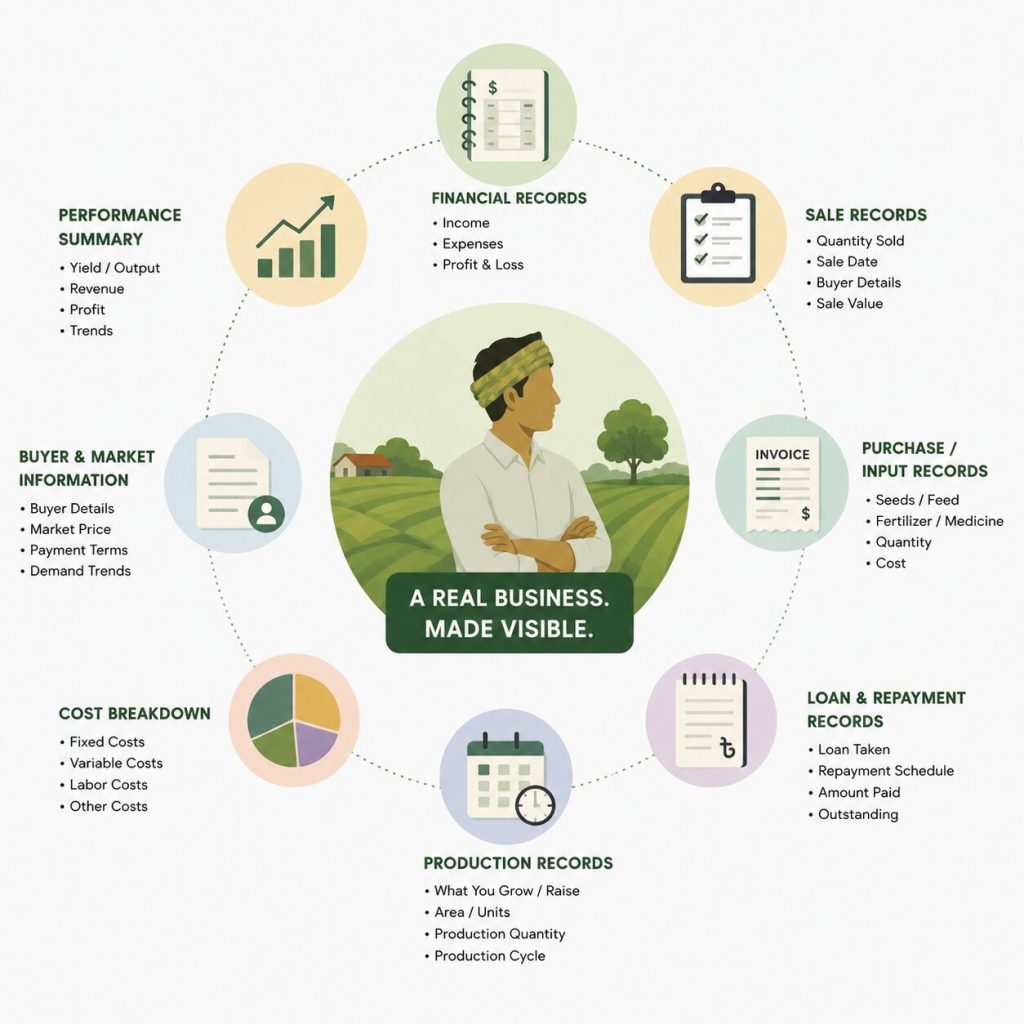
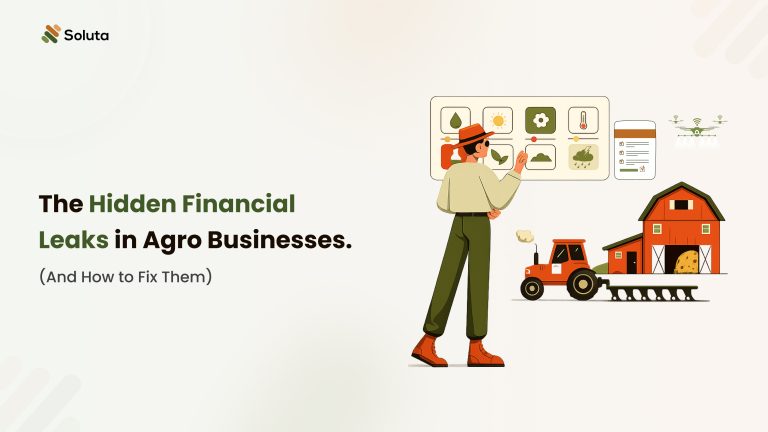
Image: How to Make a Business Visible Financially
The bottleneck is often visibility. So, your first job is to become assessable.
The Four Doors Most Small Farmers Don’t Know Exist
There is no single door marked “farmer loan.” Different financing routes work for different farms. Understand that first.
Collateral-Free Bank Credit Under the Agricultural Credit Policy
Bangladesh Bank’s agricultural and rural credit policies encourage lending to small and marginal farmers. Certain agricultural loans can be offered without traditional property collateral up to policy or product limits.
Some products also carry lower, preferential agricultural lending rates compared with ordinary business borrowing. The exact rate and ceiling can change by policy year, bank, crop, and refinancing scheme.
Do not walk into a branch and simply ask for a loan. Ask something that is specific and easy for the officer to answer: “What collateral-free agricultural credit products are available for my type of farming?”
That is a very different conversation.
Producer Organizations and Group Lending
A Producer Organization, farmer group, or similar collective can make individual farmers easier to finance. Here’s why.
The lender is no longer looking at one isolated person. The group can help verify production, membership, farming activity, and market participation.
In some financing models, the group’s recommendation or collective accountability works as a form of social collateral. That means trust, group records, and verified relationships help reduce the lender’s uncertainty.
Farmer organizations have also been used in Bangladesh to help smallholders prepare documentation and connect with formal financial institutions.
Contract Farming With Agro-Processors
If a processor, aggregator, dairy, seed company, or other buyer has agreed to purchase your output, that relationship may strengthen your financing case.
In contract-farming finance, the future harvest and confirmed buyer relationship can help secure input credit or seasonal finance. Repayment may be linked to the sale of the product.
In plain words: the lender or financing partner can see where the repayment money is expected to come from. The harvest becomes part of the security structure.
This model varies widely by crop, company, and contract. Read every agreement carefully before signing.
Agent Banking and Digital Loan Origination
The nearest full bank branch may be far away. But that no longer means every banking conversation must start there.
Agent-banking outlets have expanded financial access in rural Bangladesh. Some commercial banks are also digitizing parts of agricultural loan processing to reduce paperwork and processing time.
Bangladeshi banks already describe digital processes, smartphone-based applications for certain smaller loans, and rural lending through branch or alternative networks.
Ask the local agent what agricultural credit routes the bank supports.
The agent may not approve your loan. But the outlet can help you find the correct door.
What a Lender Actually Needs to See
A lender is trying to answer two basic questions.
Can you repay the money?
And:
Can you prove it?
Those are not the same question.
You may have grown rice for 20 years. You may know exactly when water stress will hurt your crop. You may know which buyer pays two taka more per kilogram.
That experience is valuable.
But a loan officer still needs evidence.
How much did you spend last season? How much did you sell? When did the sales happen? What debt are you already carrying? If you borrow Tk 100,000, what exactly will the money buy?
This is why six months of clean records can sometimes tell a lender more than twenty years of undocumented experience.
The lender is not asking whether you are a “real farmer.” The lender is trying to turn your farm into a decision they can defend on paper.
Help them do that.
The One-Season Plan
You do not need to rebuild your entire financial history.
Start with this season.
Weeks 1–2: Separate the Money
Create a clear boundary between farm money and household money.
A separate bank or mobile financial account can help where appropriate. If that is not practical, use two separate cash records.
One is for the farm. One is for the household.
When you sell fish, the full sale goes into the farm record first. If you take Tk 5,000 home, record it as money withdrawn for household use.
Do not hide that withdrawal.
The goal is not to stop supporting your family.
The goal is to see what the business actually earns before the money moves elsewhere.
Month 1 — Start Recording From Today
Do not spend three weeks trying to remember last year’s fertilizer purchases.
Start today. Write down every farm expense.
Seed. Feed. Fingerlings. Fertilizer. Pesticide. Irrigation. Diesel. Electricity. Transport. Labour. Equipment repair.
Then record every sale. Write the date, product, quantity, buyer, and amount received. A notebook is enough if you use it every day.
The most important rule is consistency. Do not estimate Friday’s costs on Monday morning. Record the transaction when it happens. Forward is better than perfect.
Month 2: Know What Each Plot Earns
Suppose you grow vegetables on one plot and rice on another.
Do you know which one actually earns more after costs?
If you run ponds, can you separate Pond A from Pond B?
If you raise poultry and cattle, can you see which operation is carrying the business?
Start tracking income and direct costs by crop, plot, pond, herd, or production unit. This gives you a simple picture of profitability: what remains after the costs of producing and selling. A lender wants to finance an activity that can repay.
Show which activity does that.
Month 3: Find Your Door
Now start asking questions. Visit a bank branch or agent-banking outlet.
Your best practice is to be specific.
Say what you produce and ask about collateral-free agricultural products available under current bank policy. Ask what documents are required. Ask whether repayment can follow the crop or production cycle.
Then look beyond the bank.
Is there a farmer group or Producer Organization in your area?
Does an agro-processor buy your crop?
Does a dairy, hatchery, aggregator, or food company work with contracted producers?
You are not applying yet. You are just mapping the available doors before choosing one.
Month 4: Build the Simple File
Your file does not need to look like a large company’s annual report.
Keep it simple.
Include your production records. Add sales and cost records. List your current loans and repayments. Include buyer receipts, payment messages, invoices, or transaction records where available.
Then write a one-page plan. State how much you want to borrow. State exactly what the money will buy.
Explain when production starts, when you expect to sell, and how the harvest or business income will repay the loan.
For example:
“I need financing for feed and fingerlings for two ponds. The production cycle is approximately X months. Repayment is planned from fish sales after harvest.”
Specific beats are impressive.
Months 5–6: Apply, and Apply Prepared
Now apply.
Do not ask for “as much as possible.” Ask for a specific amount linked to a specific business need.
Bring your records. Bring your one-page plan.
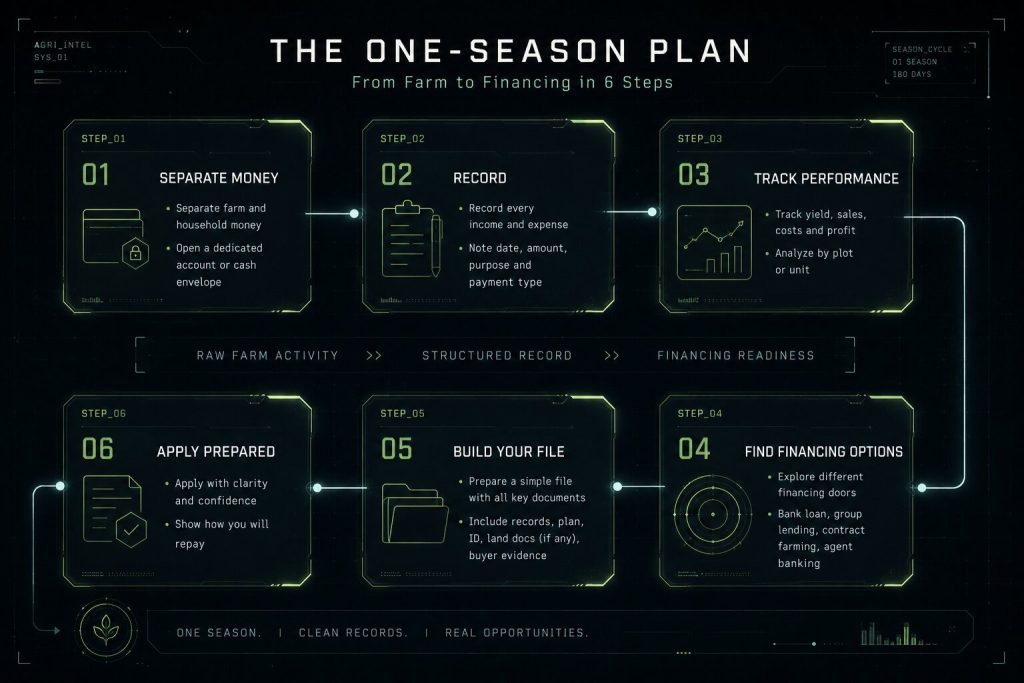
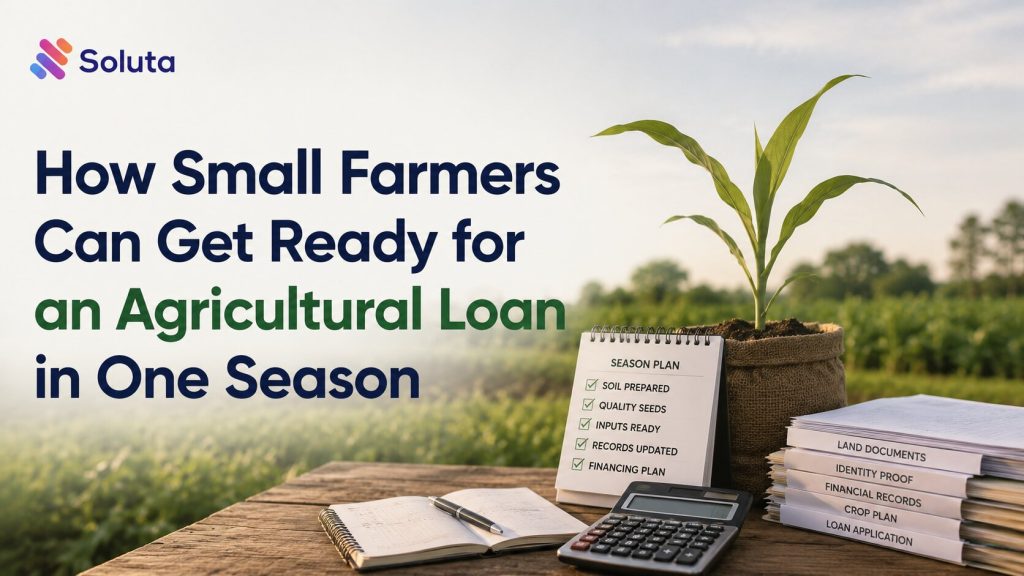
Image: The One-Season Plan Blueprint
If you already owe money to an MFI, cooperative, supplier, bank, or informal lender, say so when the application requires debt disclosure.
Hiding debt can damage trust and may create a repayment burden the lender did not calculate.
If the bank rejects the application, ask one useful question:
“What was missing from my application?”
Write down the answer. A rejection with a clear reason is information. Use it for the next application.
How Digital Records Change Everything
Agricultural lending is slowly becoming less dependent on what a farmer can explain across a desk.
Banks and agricultural finance providers are increasingly experimenting with digital loan origination and data-based assessment. The World Bank has documented how digital agricultural finance can use farm and transaction data to support “bankability” assessments and help lenders understand whether a smallholder is likely to repay.
This matters.
A farmer without a long formal credit history may still have a production history.
You have yield records, input costs, sales patterns, buyer relationships, seasonal cash flow, repayment behaviour.
Increasingly, digital systems and AI-supported risk assessment can help turn those patterns into usable evidence. The technology is still developing, and banks do not all assess agricultural borrowers in the same way.
But the direction is important.
A documented farm can increasingly be assessed on performance, not only property.
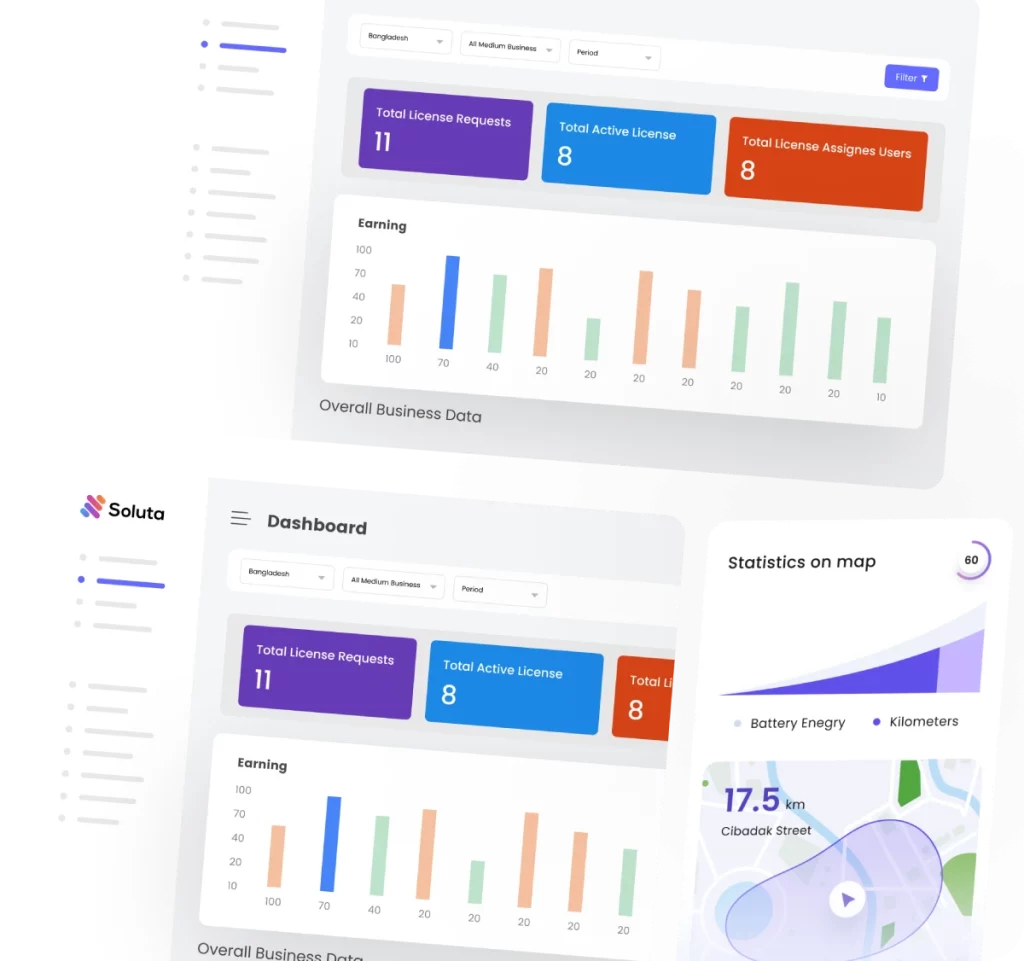
That is also where agricultural intelligence platforms such as Soluta can play a role: helping turn scattered operational activity into clearer, structured records and risk visibility.
The goal is not more data for the sake of data but to make a real business easier to see.
The Mistakes That Keep Small Farmers Stuck
Choosing Fast Money Every Season
Defaulting to the informal lender because it is faster can become expensive. Compare the total repayment cost, not just how quickly cash arrives.
Keeping Farm and Household Money Together
When everything moves through the same cash record, you lose the ability to prove what the farm actually earns.
Estimating Instead of Recording
“Around Tk 40,000” is weaker than dated sales records showing Tk 38,750. Specific records create stronger evidence.
Assuming You Are Ineligible
Agricultural credit products and policy-supported schemes change. Ask about the current options before deciding there is no financing route for you.
Using Farm Credit for Non Farm Needs
The repayment plan was built around productive use of the money. Moving it elsewhere can weaken the entire repayment cycle.
Hiding Existing Debt
A lender needs the real repayment picture. Hidden obligations can damage trust and create a repayment burden the lender did not calculate.
Frequently Asked Questions
Can I get an agricultural loan without collateral?
Possibly. Bangladesh’s agricultural credit framework and several bank products allow collateral-free lending within certain limits and conditions. Eligibility, loan ceilings, documents, and terms vary by bank, scheme, activity, and policy year.
How much can a smallholder farmer borrow?
There is no single amount for every farmer. The available loan size depends on the bank, current policy, crop or agricultural activity, production scale, expected cash flow, existing debt, and the specific credit product.
What if I have no credit history at all?
Start building evidence of business activity. Record costs, production, sales, buyers, and existing repayments. Digital and alternative-data lending models increasingly use operational evidence to assess farmers with limited formal credit histories.
Is microfinance or a bank loan better?
It depends on access, timing, repayment schedule, and total cost. Microfinance can be easier to access, but some models carry substantially higher effective costs than agricultural bank credit. Compare the full repayment amount and schedule before borrowing. Historical Bangladesh programmes have documented large cost differences between some MFI loans and bank-linked agricultural credit, though current terms vary.
FAQ
Q: Can I get an agricultural loan without collateral?
Yes, some agricultural credit products in Bangladesh allow collateral-free borrowing within applicable limits and eligibility conditions. Terms vary by bank, scheme, activity, and current policy.
Q: How much can a smallholder farmer borrow?
Loan amounts vary based on the agricultural activity, production scale, cash flow, existing debt, bank policy, and current agricultural credit scheme. There is no universal borrowing limit for every farmer.
Q: What if I have no credit history at all?
You can start building evidence through clear production, input cost, sales, buyer, and repayment records. Some digital lending models increasingly assess operational data alongside traditional credit information.
Q: Is microfinance or a bank loan better for farmers?
It depends on availability, timing, repayment terms, and total borrowing cost. Microfinance may be easier to access, while formal agricultural bank credit can offer lower-cost options under certain products or schemes.
One Season Can Change What a Lender Sees
One season can be the distance between invisible and fundable.
You cannot manufacture land you do not own, or create property documents that do not exist. But you can build a record of what your farm produces, what it costs, who buys from you, and how money moves through the business.
That record gives a lender something to assess. Start this season.
Record the first expense. Record the first sale. Separate the first farm payment from household cash. Your business already exists. You just have to make it visible.
Note: Agricultural credit limits, interest rates, collateral requirements, eligibility rules, and repayment terms vary by bank, scheme, country, and policy year. Always confirm current terms with the relevant bank or financial institution before applying.