

One bad season can change everything for a farmer. A week of unexpected rain. A sudden drop in market price. A pest attack that spreads faster than expected. Farming is not just about growing crops. It’s about surviving uncertainty.
So what actually makes farming financially unstable? It’s not just the weather. It’s the gap between decisions and reliable data. Most farmers make financial choices based on experience, local advice, or gut feeling. That works sometimes. But when markets move fast and climate patterns shift, guesswork becomes expensive.
In this article, we’ll break down how AI in agrifintech changes that reality. You’ll see how it predicts crop yield, improves credit access, stabilizes market timing, reduces climate risk, and helps manage cash flow.
Table of Contents
The Impact of AI in Agrifintech Finance
AI in agrifintech is not a robot in the field. It’s intelligence running quietly in the background of financial systems that serve farmers.
In real life, this is what it looks like.
A farmer enters basic crop details into a mobile app/system. Behind the scenes, AI combines that data with satellite imagery, soil records, past yield performance, and local weather history. Within seconds, it estimates expected output. That number becomes the foundation for financial planning – how much to invest, whether to take a loan, and what income might look like.
When it comes to credit, AI does something powerful. Instead of relying only on formal bank history, it analyzes alternative data. Crop cycles. Input purchases. Repayment behavior. Even regional production patterns. This allows lenders to understand risk better. Farmers who were once “unbankable” suddenly become eligible for structured financing.
5 Ways AI in Agrifintech Reduces Financial Uncertainty
Financial uncertainty in farming doesn’t come from one single problem. It comes from many small risks stacking up – unstable prices, unpredictable weather, limited credit access, scattered expense tracking, and poor planning visibility.
Here are five real ways AI reduces financial pressure for farmers.
Stabilizing Market Price Fluctuations
Market prices can change overnight. A farmer may harvest at peak quality but still lose profit because supply suddenly increases in the region.
AI monitors real-time price trends across markets. It analyzes supply-demand patterns, seasonal shifts, and buyer behavior. Instead of selling blindly, farmers receive insights on timing and location.
If data suggests prices may rise in the coming weeks, farmers can delay selling if storage allows. If another nearby market offers better margins, they can redirect supply. This doesn’t eliminate price fluctuation. But it reduces the shock factor. And that alone protects income stability.
Minimizing Weather Risk and Saving Cost
Weather is one of the biggest financial threats in agriculture. Unexpected rainfall, drought, or heat waves can destroy yield and increase recovery costs.
AI-powered forecasting models analyze historical climate patterns, satellite data, and seasonal trends. Farmers receive early alerts about potential risks. That early information changes decisions.
Planting dates can shift. Irrigation can be adjusted. Fertilizer use can be optimized. Insurance coverage can be activated early.
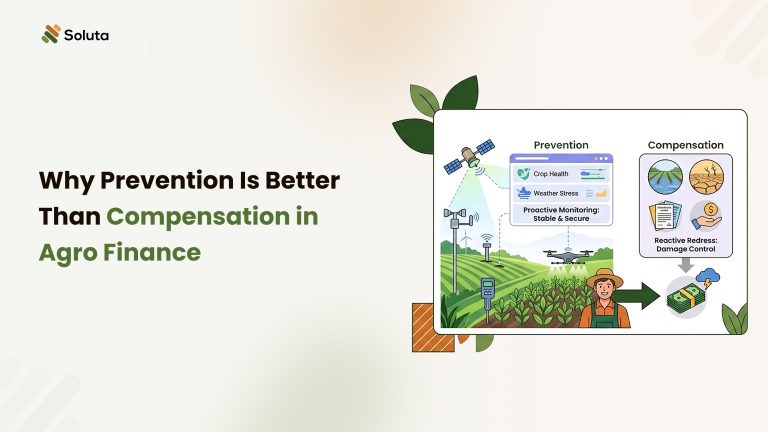
When farmers act before the damage happens, they reduce loss. And preventing loss is far cheaper than recovering from it.
Smarter Credit Scoring and Easier Loan Access
AI changes how risk is calculated.
Instead of only checking bank statements, AI evaluates crop cycles, input purchases, past repayment behavior, and regional farm performance data. It builds a dynamic credit profile.
This helps lenders approve loans faster and more accurately. Farmers get access to structured financing without unrealistic collateral demands. Better credit access means better planning. And better planning reduces financial stress.
Predictive Crop Yield for Better Financial Planning
Most financial mistakes in farming begin with inaccurate yield expectations.
AI analyzes soil data, weather forecasts, historical production records, and crop health patterns to estimate expected yield before harvest.
With a realistic projection, farmers can calculate expected income early. They can decide how much to invest. How much to borrow. How much to store.
Instead of hoping for a number, they plan around a probable outcome. That reduces over-investment and limits unnecessary debt.
Easier Cash Flow Management From One Place
One of the quiet financial burdens farmers face is scattered information. Expenses are recorded in notebooks. Loan dates are remembered mentally. Sales data is incomplete.
AI-powered agrifintech platforms centralize everything. Input costs. Loan repayment schedules. Insurance payments. Sales revenue. Projected harvest income.
The system can forecast upcoming cash gaps. It can show when repayment pressure might peak. It can suggest adjustments.
Real-World Case Study: A Farmer Before and After AI Adoption
Let’s make this practical.
Meet Rahim, a small-scale rice farmer managing 5 acres of land. For years, his decisions were based on experience and local advice. Some seasons were good. Some were painful. The biggest problem was not farming itself. It was financial uncertainty.
He never knew his exact yield until harvest. He borrowed money without clear projections. He sold crops immediately after harvest when prices were usually lowest.
Then he adopted an AI-powered agrifintech platform.
Here’s what changed.
Before AI Adoption
Rahim’s average annual numbers looked like this:
| Category | Annual Amount (USD) |
| Total Investment (seeds, fertilizer, labor) | $8,000 |
| Loan Interest & Late Penalties | $1,200 |
| Weather-Related Crop Loss | $1,500 |
| Total Harvest Revenue | $12,000 |
| Net Annual Income | $1,300 |
Simple equation:
Net Income = Revenue – (Investment + Interest + Loss)
= 12,000 – (8,000 + 1,200 + 1,500)
= 12,000 – 10,700
= $1,300
One bad season could wipe that out completely.
After AI Adoption
With AI-powered yield prediction, smarter credit scoring, weather alerts, and price timing insights, Rahim started making data-driven decisions.
Here’s the updated annual picture:
| Category | Annual Amount (USD) |
| Total Investment (optimized inputs) | $7,200 |
| Loan Interest (better risk scoring) | $800 |
| Weather-Related Loss (early action taken) | $600 |
| Harvest Revenue (better price timing) | $13,500 |
| Net Annual Income | $4,900 |
New equation:
Net Income = 13,500 – (7,200 + 800 + 600)
= 13,500 – 8,600
= $4,900
Annual Financial Improvement
Previous Income: $1,300
New Income: $4,900
Annual Gain = $3,600
That’s nearly 3.7x growth in net income without increasing land size.
What Actually Made the Difference?
- AI predicted yield early, so Rahim didn’t over-invest.
- Smart credit scoring reduced interest burden.
- Weather alerts minimized crop damage.
- Market insights helped him delay selling by two weeks, increasing price margins.
- A single dashboard showed his full cash flow picture.
But the biggest change wasn’t just the money.Rahim no longer makes decisions under pressure. He plans. He calculates. He anticipates.
His farming didn’t become risk-free. It became predictable. And in agriculture, predictability is power.
Get Smarter Agricultural Insights With Soluta
Monitor weather, reduce risks, improve farm decisions, and stay ahead with AI-driven agricultural intelligence.
Download the AppFinal Words
Farming will always carry risk. Weather shifts. Markets move. Costs fluctuate. But uncertainty does not have to control outcomes. This article showed how AI in agrifintech transforms scattered data into clear financial direction.
From smarter credit access to yield prediction and cash flow planning, AI reduces the financial pressure farmers face every season. The real shift is simple: replacing instinct-only decisions with informed strategy. And that shift creates stability, confidence, and sustainable growth for modern agriculture.