
AI in Agriculture is rapidly becoming one of the most important technologies in the global food system. With the world’s population expected to approach 10 billion by 2050, agriculture must produce roughly 70% more food while facing climate change, labor shortages, water scarcity, and shrinking arable land.
So, how does AI in agriculture impact the future? AI will shape the future of agriculture by helping farmers grow more food with fewer resources, reduce waste, and predict problems earlier. It also helps farmers move from reactive decisions to proactive, data-driven strategies that improve efficiency, profitability, and sustainability.
From predicting crop yields to identifying diseases before they spread, AI is helping farms make smarter decisions at every stage of production. In this guide, you’ll learn how AI works in modern farming, explore 12 real-world applications, understand the benefits and limitations, and see what the future may hold for the industry.
Table of Contents
What Is AI in Agriculture?
In short, AI in agriculture means the use of artificial intelligence technologies to analyze agricultural data, automate tasks, and support better farming decisions.
Instead of relying solely on experience, manual observation, or fixed schedules, AI systems process massive amounts of information from sensors, satellites, drones, machinery, weather stations, and farm records. They then identify patterns, generate recommendations, and sometimes take automated actions.
The goal is simple: help farmers make better decisions with greater accuracy.
Traditional farming often depends on periodic inspections and generalized treatments. AI-driven farming enables more precise actions based on real-time field conditions.
Examples include:
- Predicting crop diseases before symptoms become visible
- Optimizing irrigation schedules
- Identifying weeds automatically
- Forecasting harvest yields
- Monitoring livestock health continuously
As a result, AI in farming supports higher productivity while reducing waste and environmental impact.
Everything this guide covers, distilled into the points that matter most.
Why it matters now
Farming must produce ~70% more food by 2050 while facing climate change, water scarcity, and labor shortages. AI is emerging as the key tool to close that gap with data-driven decisions.
What AI actually does
It analyzes data from sensors, satellites, drones, and farm records to spot patterns, generate recommendations, and automate tasks — replacing fixed schedules with real-time, field-specific action.
The core technologies
Machine learning & deep learning, computer vision, robotics & autonomous machinery, IoT & big data, and generative AI/NLP work together to power modern farms.
12 real-world applications
Soil & crop monitoring, disease & pest detection, precision weed control, precision irrigation, yield prediction, smart planting, autonomous machinery, drones, livestock monitoring, supply-chain forecasting, farmer chatbots, and generative crop breeding.
Proven, measurable results
Disease-detection models exceed 90% accuracy, “See & Spray” cuts herbicide use up to ~90%, and variable-rate irrigation saves up to 30% of water — all while maintaining productivity.
Key benefits
Higher yields, lower input costs, more efficient water and resource use, earlier risk detection, stronger sustainability, and relief from labor shortages.
Real barriers to adoption
Upfront costs, connectivity gaps, data quality and privacy, skills and training needs, smallholder accessibility (470M+ small farms), resistance to change, and evolving regulation.
Where it’s heading
2026 and beyond points to generative crop development, multimodal advisors, edge AI, climate-resilient systems, autonomous farm fleets, and wider access for developing nations.
The Core AI Technologies Powering Modern Farming
Modern agricultural AI systems rely on several complementary technologies.
Machine Learning & Deep Learning
Machine learning in agriculture uses algorithms that learn from historical and real-time data to make predictions, recommendations, and automated decisions. These models can forecast yields, detect diseases, estimate water requirements, and optimize planting strategies.
Computer Vision
Computer vision enables machines to analyze and understand images and videos from cameras, drones, and satellites. It is widely used for crop monitoring, disease detection, weed identification, and harvest assessment.
Robotics & Autonomous Machinery
Agricultural robots use AI to perform physical farming tasks with minimal human intervention. Examples include autonomous tractors, robotic weeders, and automated harvesting systems.
IoT & Big Data
IoT devices collect real-time farm data that AI systems analyze to improve operational decisions. Sensors can measure soil moisture, temperature, nutrient levels, livestock activity, and weather conditions.
Generative AI & NLP
Generative AI and natural language processing help farmers access information, generate recommendations, and simulate agricultural scenarios using conversational interfaces. These technologies are increasingly powering agricultural advisory platforms and decision-support systems.
12 Real-World Applications of AI in Agriculture
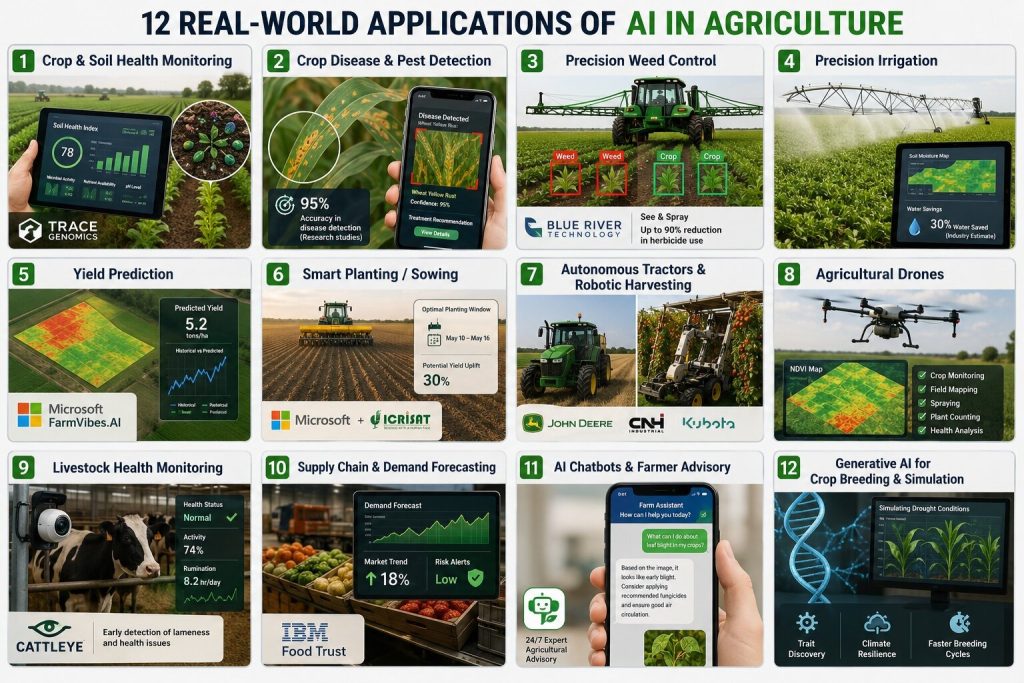
Image: A generated image of all 12 AI in Agriculture Applications in a nutshell
Crop & Soil Health Monitoring
Maintaining healthy soil and crops is one of the most valuable applications of AI in agriculture.
Top companies use machine learning and soil DNA analysis to help farmers understand nutrient availability, disease risks, and microbial activity beneath the surface.
AI systems combine data from soil samples, satellite imagery, and field sensors to identify issues long before they become visible. Farmers can then apply fertilizers, amendments, or treatments only where needed.
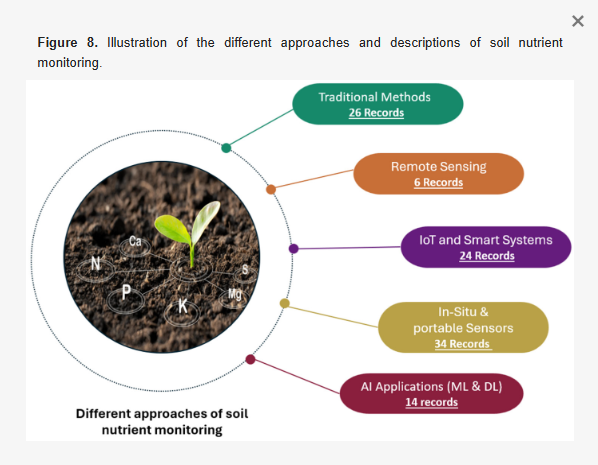
Image: Different approaches of soil nutrient monitoring
This targeted approach reduces unnecessary inputs while improving productivity.
Crop Disease & Pest Detection
Plant diseases cause billions of dollars in agricultural losses every year.
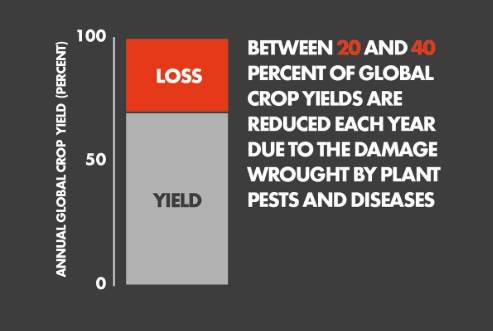
Image from: plantlet
AI-powered computer vision systems can analyze leaf images and detect disease symptoms with remarkable accuracy. Research studies have reported disease-identification models achieving over 90% accuracy across multiple crop categories, including apple diseases and wheat rust detection.
Farmers can upload smartphone photos or use automated field cameras to receive near-instant diagnoses. These systems help identify fungal infections, bacterial diseases, viral outbreaks, nutrient deficiencies, and pest infestations.
Precision Weed Control
Traditional herbicide spraying often treats entire fields regardless of actual weed presence.
AI changes that.
Blue River Technology developed the “See & Spray” system, which uses computer vision to distinguish weeds from crops in real time.
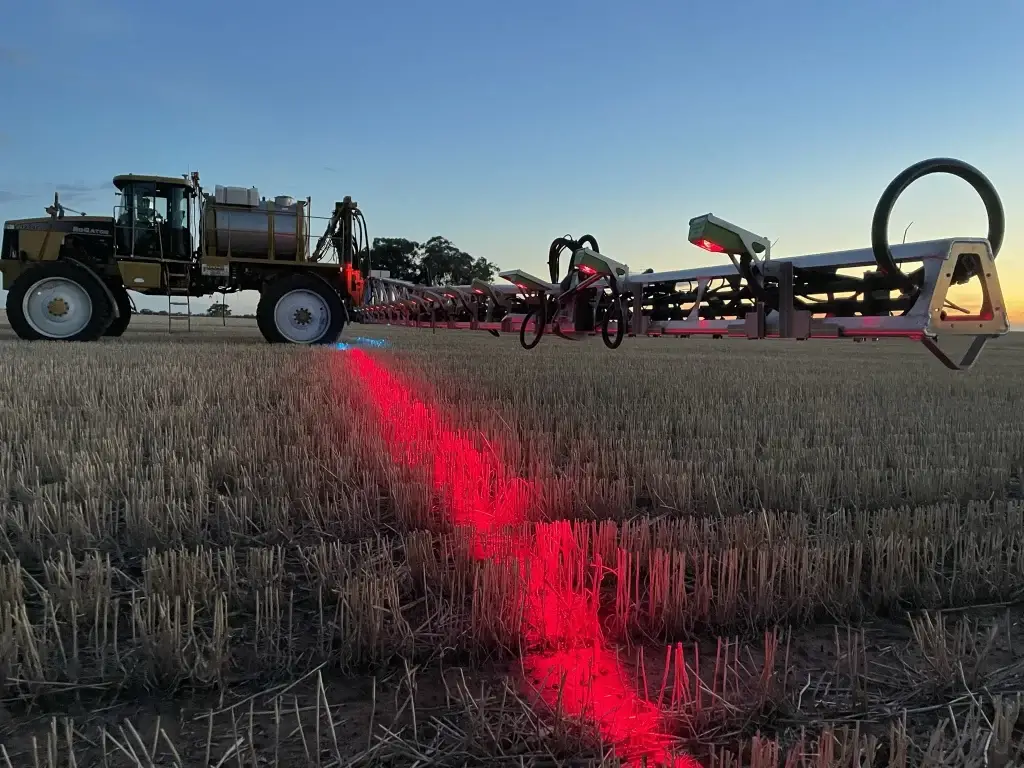
Image from: WEEDIT AUSTRALIA
Instead of spraying everywhere, the system targets individual weeds. Field demonstrations have reported herbicide reductions approaching 90% in certain conditions.
Other innovators include Naïo Technologies and ecoRobotix.
These technologies support sustainable farming by reducing chemical use and lowering costs.
Precision Irrigation
Water management has become increasingly important as droughts and climate variability affect agricultural regions worldwide.
AI-powered precision agriculture platforms analyze soil moisture and weather forecasts while farming, crop growth stages, and evapotranspiration rates. The system then determines exactly when and where irrigation is needed.
Variable Rate Irrigation (VRI) technologies have demonstrated water savings of up to 30% in many agricultural settings while maintaining crop productivity.
Rather than irrigating an entire field equally, farmers can apply water according to actual crop requirements. The result is improved resource efficiency and reduced water waste.
Yield Prediction
Yield forecasting is one of the most valuable applications of AI in farming. Accurate predictions help farmers make better decisions regarding harvest planning, labor allocation, storage requirements, market timing, and supply contracts.
Platforms such as Microsoft FarmVibes combine weather data, satellite imagery, field conditions, and historical performance records to improve forecasting accuracy.
Researchers worldwide continue developing machine-learning models capable of predicting yields months before harvest. More accurate yield prediction reduces uncertainty across the agricultural value chain.
Smart Planting & Sowing
Choosing the right planting time can significantly impact productivity.
AI systems analyze weather forecasts, historical climate data, soil conditions, and crop characteristics to identify optimal planting windows.
One widely cited collaboration between Microsoft and ICRISAT demonstrated meaningful yield improvements for farmers by providing AI-powered sowing recommendations.
By helping farmers plant under favorable conditions, AI reduces risk and improves crop establishment.
Smart planting tools are becoming increasingly valuable as weather patterns grow less predictable.
Autonomous Tractors & Robotic Harvesting
Agricultural labor shortages continue to affect farming operations globally. To address this challenge, manufacturers are investing heavily in autonomous machinery.
Major companies include:
- John Deere
- CNH Industrial
- Kubota
Modern autonomous tractors can navigate fields using GPS, cameras, sensors, and AI software. Robotic harvesting systems can identify ripe produce and harvest it with minimal human involvement.
These technologies improve operational efficiency while helping farms address workforce shortages.
Agricultural Drones
Agricultural drones have become a cornerstone of smart farming.
Equipped with cameras and sensors, drones collect high-resolution field data that AI systems analyze for actionable insights.
Common uses include:
- Crop monitoring
- Disease detection
- Irrigation assessment
- Plant counting
- Field mapping
- Input application
Drone-based monitoring allows farmers to inspect large areas quickly and identify problems that may not be visible from the ground.
Combined with AI analytics, agricultural drones provide a scalable solution for precision agriculture.
Livestock Health Monitoring
Modern livestock monitoring systems use computer vision, wearable sensors, and machine learning algorithms to track animal movement, feeding behavior, activity levels, and overall condition. Instead of relying solely on periodic visual inspections, farmers can receive continuous insights into the health of their herds.
As herd sizes continue to grow, manually observing every animal becomes increasingly difficult. AI helps bridge that gap by providing around-the-clock monitoring, improving health outcomes while reducing the risk of costly illnesses going unnoticed. For livestock producers, this means better animal welfare, more efficient farm management, and stronger long-term profitability.
Supply Chain & Demand Forecasting
The role of AI in agriculture extends well beyond the farm gate. Once crops are harvested, producers still face challenges related to storage, transportation, demand fluctuations, and food waste.
AI-powered forecasting tools help agricultural businesses make more informed decisions by analyzing historical sales trends, weather conditions, market signals, and logistics data. These systems can identify patterns that would be difficult to detect through manual analysis alone, allowing businesses to anticipate demand and allocate resources more effectively.
In an industry where timing often determines profitability, AI provides a significant advantage by helping organizations react more quickly to changing market conditions and consumer demand.
AI Chatbots & Farmer Advisory
Access to reliable agricultural expertise remains a challenge for many farmers, particularly in rural and underserved regions. AI-powered advisory platforms are helping close that knowledge gap by making agronomic guidance more accessible than ever before.
Using natural language processing, modern agricultural chatbots can answer questions related to crop management, pest control, irrigation practices, fertilizer applications, and weather-related concerns. Farmers can often access this information through a smartphone, receiving recommendations in a simple and easy-to-understand format.
The value of these systems goes beyond convenience. For many smallholder farmers, AI advisory tools provide access to expert-level guidance that may otherwise be unavailable due to geographic or economic limitations.
Generative AI for Crop Breeding & Simulation
Generative AI in agriculture is still in its early stages, but it is already showing enormous potential for accelerating agricultural innovation.
Researchers are using advanced AI models to simulate how crops may perform under different environmental conditions, helping identify desirable traits before years of field testing are required. This capability could significantly shorten the development cycle for new crop varieties while reducing research costs.
One of the most promising applications involves climate resilience. By analyzing genetic data alongside environmental variables, generative AI can help researchers explore combinations that may improve drought tolerance, disease resistance, and overall crop performance.
Beyond breeding programs, generative AI is also being used to model future farming scenarios and evaluate management strategies under changing climate conditions. As the technology matures, it may become a powerful tool for developing crops that are better equipped to meet future food security challenges.
Key Benefits of AI in Agriculture
AI is helping farms become more productive, efficient, and resilient. Here are some of the key benefits driving its rapid adoption.
Higher Yields Through Better Decision-Making
One of the biggest reasons farmers invest in AI is its ability to improve decision-making throughout the growing season. Instead of relying solely on historical experience or fixed schedules, AI analyzes weather conditions, soil data, crop health, and field performance in real time.
This allows farmers to make more informed choices about planting, irrigation, fertilization, and pest management. Even small improvements in timing can have a significant impact on overall productivity. Across multiple field trials and commercial deployments, farms using AI-assisted recommendations have reported noticeable yield improvements while maintaining more consistent crop quality.
Lower Input Costs Without Sacrificing Performance
Agricultural inputs are becoming increasingly expensive. Fertilizers, pesticides, herbicides, fuel, and water account for a large portion of production costs, making efficiency a top priority for modern farms.
AI helps reduce unnecessary applications by identifying exactly where resources are needed. Precision spraying systems, for example, can distinguish weeds from crops and apply herbicides only where required. Similarly, intelligent irrigation platforms prevent overwatering by responding to actual field conditions rather than fixed schedules.
The result is often lower operating costs and a stronger return on investment.
More Efficient Use of Water and Natural Resources
Resource efficiency has become a major concern as climate risks continue to increase. Water shortages, soil degradation, and changing weather patterns are forcing farms to do more with less.
AI-powered precision agriculture systems provide farmers with a clearer understanding of how resources are being used across the farm. By monitoring soil moisture, nutrient levels, and crop stress, these tools help ensure that water and fertilizers are applied only when necessary.
This not only lowers costs but also reduces environmental impact and improves long-term farm sustainability.
Earlier Detection of Risks and Problems
Many agricultural challenges become expensive because they are discovered too late. A disease outbreak, pest infestation, or irrigation failure can spread across a field before visible symptoms appear.
AI changes that dynamic by continuously monitoring crops and livestock for subtle warning signs. Computer vision systems can identify leaf abnormalities, while predictive models can flag emerging risks based on weather patterns and historical data.
By catching problems earlier, farmers gain valuable time to respond before losses escalate.
Stronger Sustainability Outcomes
Sustainability is no longer just a regulatory or marketing concern. It has become a business necessity.
AI supports sustainable farming by helping producers reduce waste, optimize resource use, and minimize unnecessary chemical applications. Precision technologies make it possible to target interventions with greater accuracy, reducing runoff and lowering environmental pressure on surrounding ecosystems.
As governments, consumers, and supply chains place greater emphasis on sustainable production practices, AI is becoming an important tool for balancing profitability with environmental responsibility.
Relief From Labor Shortages
Labor availability remains one of the biggest challenges facing agriculture worldwide. Many farms struggle to recruit and retain workers, particularly during planting and harvest seasons.
AI-powered automation helps fill some of these gaps. Autonomous tractors, robotic harvesters, and intelligent monitoring systems can perform repetitive tasks with minimal human supervision. Rather than replacing farmers, these technologies allow existing teams to focus on higher-value work while improving operational efficiency.
For many operations, labor support may become one of the most compelling reasons to adopt AI over the next decade.
Challenges & Limitations of AI Adoption
Despite its potential, AI adoption is not without obstacles. Here are a few operational challenges in agriculture.
Upfront Costs
Many AI-enabled technologies require significant investment in equipment, software, sensors, and infrastructure.
While long-term returns may be attractive, initial costs can be difficult for some operations to justify.
Connectivity and Infrastructure Gaps
Many agricultural regions still face limited internet access and inadequate digital infrastructure.
Without reliable connectivity, certain AI applications become more difficult to implement.
Data Quality and Privacy Concerns
AI systems are only as effective as the data they receive.
Incomplete, inaccurate, or biased data can reduce performance and lead to poor recommendations.
Data ownership and privacy concerns also remain important considerations.
Skills and Training Requirements
Farmers and agricultural workers may require new skills to effectively use AI-powered systems.
Training, education, and technical support are often necessary for successful implementation.
Smallholder Farmer Accessibility
Approximately 570 million farms operate worldwide, and around 470 million are smallholder farms.
Ensuring affordable access to AI technologies remains one of the industry’s biggest challenges.
Resistance to Change
Agriculture is a tradition-rich industry.
Many producers understandably prefer proven practices over emerging technologies. Adoption often depends on demonstrating clear value and measurable results.
Ethical and Regulatory Questions
As AI becomes more influential in agricultural decision-making, questions surrounding transparency, accountability, data governance, and regulation will continue to evolve.
The Future of AI in Agriculture (2026 and Beyond)
The next phase of AI in Agriculture is likely to focus on deeper automation, better accessibility, and greater climate resilience.
Several trends are expected to shape the industry:
Generative AI-Powered Crop Development
Researchers are increasingly using AI models to accelerate breeding programs and identify desirable genetic traits.
Multimodal Agricultural Advisors
Future advisory systems will combine text, voice, images, sensor data, and weather information into a single decision-support experience.
Edge AI Deployment
Rather than relying entirely on cloud processing, more AI workloads will run directly on farm equipment, sensors, and mobile devices.
This reduces latency and improves performance in areas with limited connectivity.
Climate-Resilient Farming Systems
AI will play an increasingly important role in helping farms adapt to changing weather patterns and environmental conditions.
Autonomous Farm Fleets
The future may include coordinated fleets of autonomous tractors, harvesters, drones, and field robots working together across large agricultural operations.
Greater Access for Developing Nations
As technology costs decline and connectivity improves, AI tools are expected to become more accessible to smallholder farmers around the world.
Frequently Asked Questions
How is AI used in agriculture?
AI is used to analyze farm data, automate tasks, monitor crops and livestock, predict yields, optimize irrigation, detect diseases, and support decision-making. It helps farmers improve productivity while reducing waste and resource consumption.
What are the benefits of AI in farming?
AI in farming can increase yields, reduce input costs, improve resource efficiency, support sustainability, identify risks earlier, and help address labor shortages through automation and intelligent decision support.
What are examples of AI in agriculture?
Examples include crop disease detection, autonomous tractors, precision spraying systems, agricultural drones, livestock monitoring platforms, yield prediction tools, irrigation optimization systems, and AI-powered farmer advisory applications.
Will AI replace farmers?
No. AI is designed to assist farmers rather than replace them. Human expertise, local knowledge, and strategic decision-making remain essential. AI serves as a powerful tool that helps farmers work more efficiently and make better-informed decisions.
What is precision agriculture?
Precision agriculture is a farming approach that uses data, sensors, GPS technology, and AI to manage crops and resources more accurately. The goal is to apply inputs such as water, fertilizer, and pesticides only where and when they are needed.
Conclusion
Agriculture faces an unprecedented challenge: producing more food while using fewer resources and adapting to a changing climate. Artificial intelligence is emerging as one of the most powerful tools available to meet that challenge.
From crop monitoring and yield prediction to autonomous machinery and generative AI-driven breeding programs, the real-world applications of AI in Agriculture are already delivering measurable value.
While adoption challenges remain, the long-term direction is clear. Farms that successfully combine human expertise with intelligent technology will be better positioned to improve profitability, strengthen sustainability, and build resilience for the future.