
Agriculture impact on climate change is one of the most important environmental issues shaping the future of food, ecosystems, and global sustainability. Yet the relationship is often misunderstood. Depending on how emissions are measured, agriculture may account for a relatively small share of direct greenhouse gas emissions or a much larger share when land-use change and food supply chains are included.
So, the question is, what is agriculture’s impact on climate change? This distinction matters. Direct agricultural activities such as livestock production and fertilizer use generate significant greenhouse gases. At the same time, broader agricultural expansion, deforestation, food processing, transportation, and waste add substantially to the climate footprint of the global food system.
The story is also two-sided. Agriculture contributes to climate change, but it is also among the sectors most vulnerable to rising temperatures, shifting rainfall patterns, and extreme weather events. This article explains how agriculture affects the climate, where emissions come from, why estimates vary, and what solutions can help reduce the sector’s environmental impact.
Table of Contents
How Does Agriculture Impact Climate Change? (in 1 Minute)
Agriculture impacts climate change primarily through agricultural greenhouse gas emissions, including methane from livestock, nitrous oxide from fertilizers and soils, and carbon dioxide from land-use change and energy use. Agriculture and climate change are deeply connected because farming contributes to warming while climate change simultaneously threatens agricultural productivity and food security.
The relationship extends beyond farms. Food production systems influence forests, water resources, transportation networks, and land management practices worldwide. Understanding these connections is essential for developing effective climate solutions.
Key Takeaways
- ▸ Agriculture contributes to climate change through multiple sources, not just livestock. Methane from livestock, nitrous oxide from fertilizers, carbon dioxide from land-use change, and emissions across the food system all play a role in increasing greenhouse gas concentrations.
- ▸ Emission estimates vary because they measure different boundaries. Some studies count only direct farm emissions, while others include land-use change, food processing, transportation, storage, and food waste. That’s why you’ll often see different percentages reported.
- ▸ The relationship goes both ways. Agriculture contributes to climate change, but climate change also affects agriculture through rising temperatures, droughts, floods, shifting rainfall patterns, extreme weather events, and declining crop yields.
- ▸ Land-use change is one of agriculture’s biggest climate challenges. Clearing forests, grasslands, and wetlands for farming releases stored carbon into the atmosphere while reducing nature’s ability to absorb future emissions.
- ▸ Agriculture can also become part of the solution. Climate-smart farming, regenerative agriculture, precision fertilizer management, soil carbon sequestration, methane capture, and reducing food waste can significantly lower agriculture’s climate impact while helping farmers build more resilient food systems.
Agriculture’s Climate Impact: What the Data Actually Shows
One reason discussions about agriculture and climate change become confusing is that different studies measure different things.
The question that arises, does agriculture impact climate change? Or, does climate change impact agriculture?
Depending on what is included, agriculture can appear responsible for a relatively modest share of emissions or a much larger one. Here’s how.
Direct Agricultural Emissions
When agencies such as the EPA measure agricultural emissions, they focus on activities that occur directly on farms. This includes methane produced by livestock and rice cultivation, along with nitrous oxide released from fertilized soils and manure management systems.
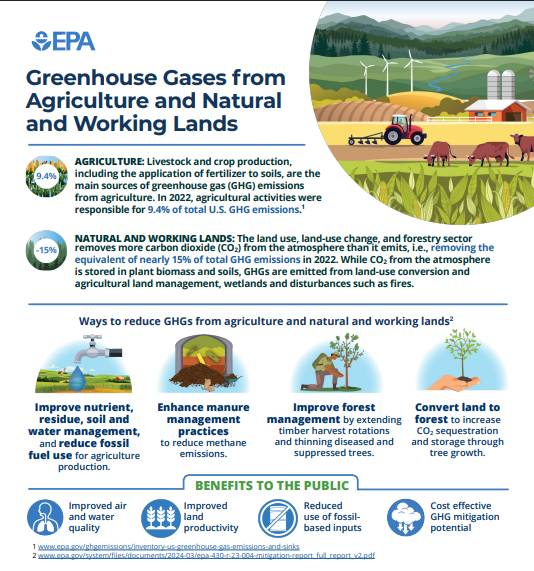
Photo: The EPA Study
Using this narrower definition, agriculture accounts for roughly 10% of total U.S. greenhouse gas emissions. Similar accounting methods are often used in national greenhouse gas inventories because they isolate emissions directly tied to farming activities.
Whole Food-System Emissions
The picture changes when researchers expand the boundary beyond the farm itself.
Modern food production relies on a vast network that includes land clearing, processing facilities, transportation systems, refrigeration, packaging, retail operations, and food waste management. Once these stages are included, estimates become significantly larger.
Studies frequently place global food-system emissions between 21% and 37% of total greenhouse gas emissions. These figures reflect the climate impact of the entire food chain, from converting land into farmland to disposing of food that is never consumed.
Why Do the Numbers Vary So Much?
The difference comes down to accounting methods rather than disagreement among scientists.
The first issue is scope. Some estimates measure only on-farm emissions, while others include forestry, land-use change, supply chains, and waste. A study examining direct farming activities will naturally produce a smaller number than one examining the entire food system.
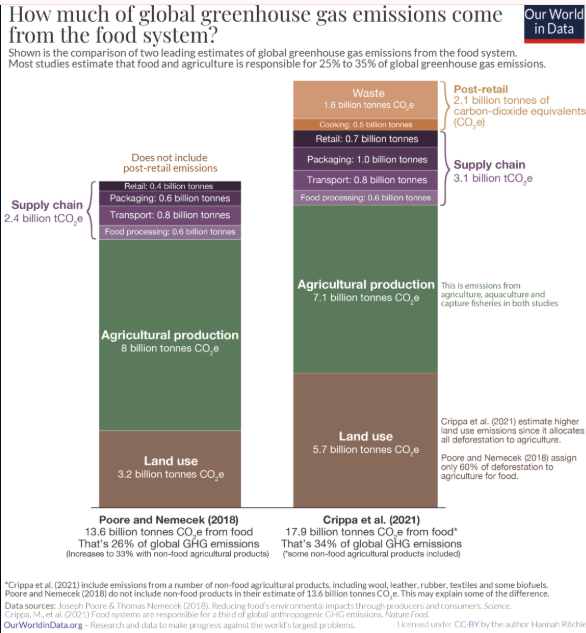
Image: Collected from our world in data
The second factor is the use of carbon dioxide equivalents, or CO₂e. Because methane and nitrous oxide trap heat differently than carbon dioxide, scientists convert them into a common unit that allows meaningful comparison.
Finally, studies may use different global warming potential calculations. Methane, for example, has a much stronger warming effect over shorter periods than over longer ones. As a result, two studies can analyze the same emissions but arrive at slightly different totals.
For that reason, there is no single figure that perfectly answers how much agriculture contributes to climate change. The most accurate answer depends on where the boundaries are drawn.
The 3 Main Greenhouse Gases from Agriculture
Agriculture contributes to climate change through three primary greenhouse gases: methane (CH₄), nitrous oxide (N₂O), and carbon dioxide (CO₂). Each gas enters the atmosphere through different agricultural activities and has a different warming effect.
Methane
Methane is one of the most significant greenhouse gases associated with agriculture and is responsible for a substantial share of the sector’s warming impact. The largest agricultural sources of methane are livestock digestion, manure storage, and flooded rice fields.
Ruminant animals such as cattle, sheep, and goats produce methane through a natural digestive process known as enteric fermentation. Because cattle populations are large worldwide and their digestive systems generate significant amounts of methane, livestock production remains one of the largest agricultural methane sources.
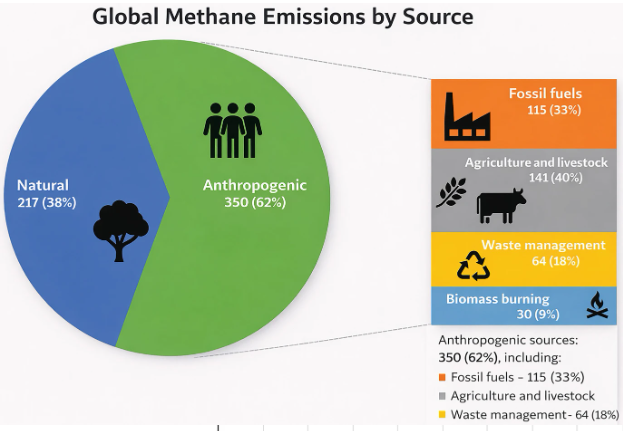
Image collected from Springer Nature
Rice cultivation is another important contributor. When rice paddies remain flooded for extended periods, oxygen levels in the soil drop, creating conditions that allow methane-producing microorganisms to thrive.
Globally, agriculture is estimated to account for roughly half of human-caused methane emissions, with livestock and rice production representing the dominant sources.
Research published in the journal Philosophical Transactions of the Royal Society A has highlighted methane’s outsized role in near-term warming and the importance of reducing agricultural methane emissions.
Nitrous Oxide
While methane often receives more public attention, nitrous oxide is an exceptionally powerful greenhouse gas. Molecule for molecule, it has a far greater warming effect than carbon dioxide over a 100-year period.
In fact, a study published that, the death due to Nitrous Oxide emission has increased about 500% in the last decade.
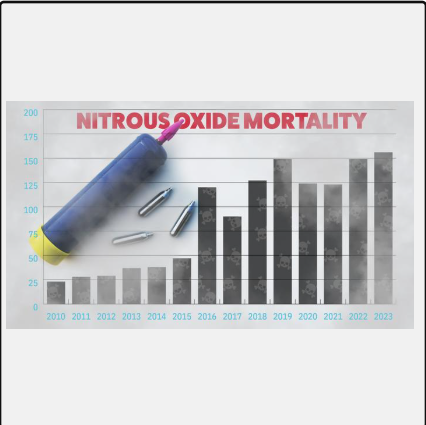
Image collected from EurekAlert
Most agricultural nitrous oxide emissions originate from nitrogen-rich soils. When synthetic fertilizers, animal manure, or crop residues add excess nitrogen to the soil, naturally occurring microbes convert part of that nitrogen into nitrous oxide through biological processes known as nitrification and denitrification.
This makes fertilizer management one of the most important climate challenges facing modern agriculture. Numerous studies have shown that agricultural activities are responsible for approximately three-quarters of global anthropogenic nitrous oxide emissions.
Carbon Dioxide
Unlike methane and nitrous oxide, carbon dioxide emissions from agriculture are often linked to land management decisions and energy use rather than biological processes occurring in soils or animals.
One of the most significant sources is land-use change. When forests, grasslands, or wetlands are cleared to create cropland or pasture, large amounts of stored carbon are released into the atmosphere.
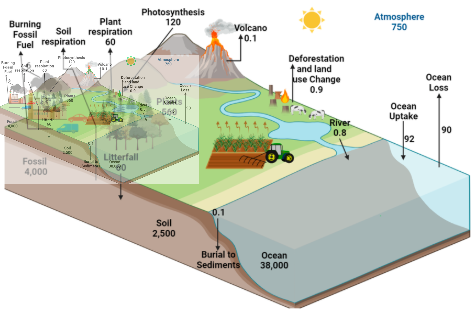
Image: CO2 emission from land use and land cover change
At the same time, the landscape loses part of its natural capacity to absorb future carbon emissions.
Agriculture also generates carbon dioxide through the use of farm machinery, irrigation systems, fertilizer manufacturing, transportation networks, and other energy-intensive activities that rely on fossil fuels.
For this reason, many climate assessments from organizations such as the IPCC identify land-use change as one of the most important pathways through which agriculture contributes to global warming.
5 Key Ways Agriculture Impacts Climate Change
Agriculture is not a single activity but a collection of farming practices: land management decisions, and food production systems. Some release greenhouse gases directly, while others reduce nature’s ability to absorb carbon. Together, these processes make agriculture one of the world’s most significant contributors to climate change. Let’s look at where these emissions come from and why they matter.
Livestock & Enteric Fermentation
Livestock production is among the largest sources of agricultural greenhouse gas emissions worldwide.
Animals such as cattle, sheep, and goats have specialized digestive systems that help them break down fibrous plants. During digestion, microbes in their stomachs produce methane, which is released mainly through belching. This natural process, known as enteric fermentation, is responsible for a large share of methane emissions from livestock.
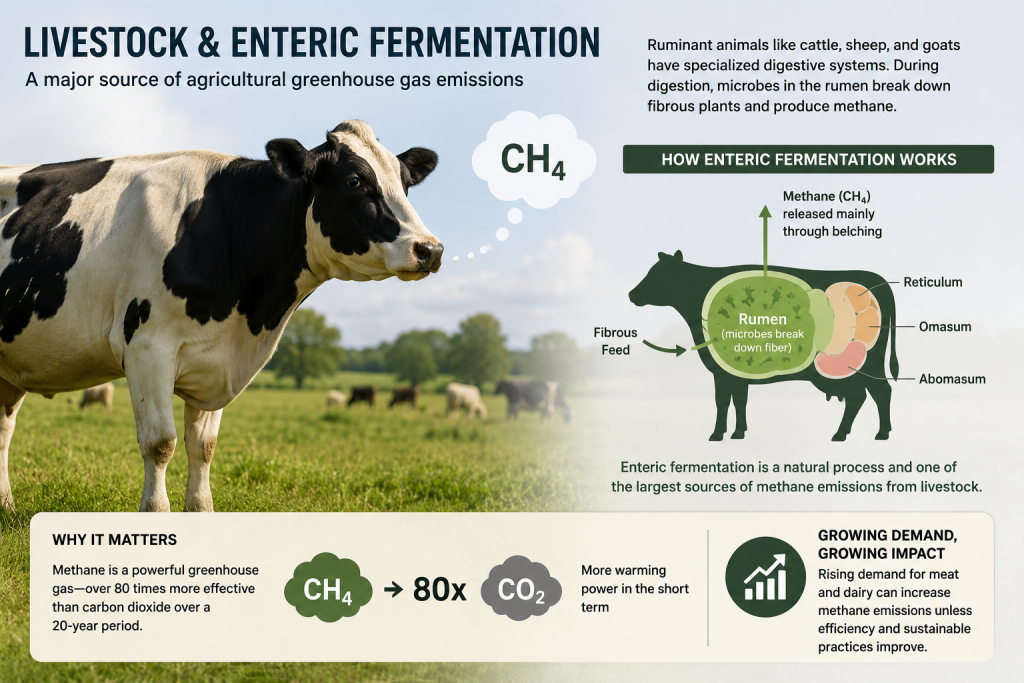
Image: Livestock & Enteric Fermentation
Because methane is far more effective at trapping heat than carbon dioxide over shorter timeframes, growing demand for meat and dairy products can increase agriculture impact on climate change.
Synthetic Fertilizer & Soil Management
Nitrogen fertilizers have helped farmers produce more food from the same amount of land, making them an essential part of modern agriculture. However, they also come with an environmental cost.
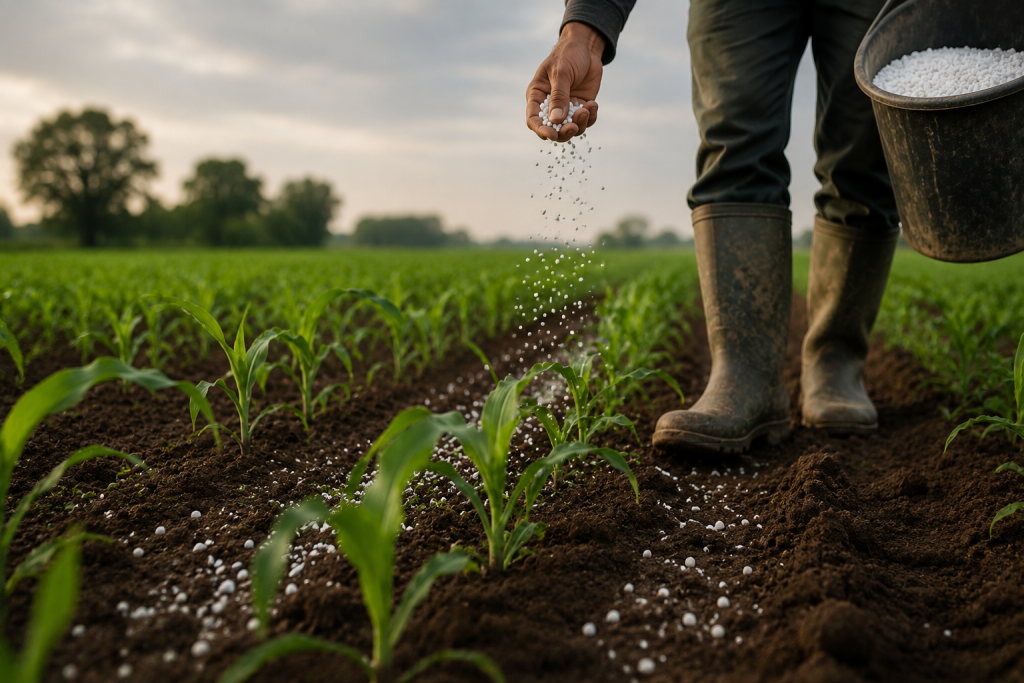
Image: AI-Generated Illustration
When crops cannot absorb all the nitrogen applied to a field, soil microbes convert some of the excess into nitrous oxide. The amount released depends on several factors, including application timing, fertilizer rates, soil moisture, temperature, and crop type.
Deforestation & Land-Use Change
Not all agricultural emissions come directly from farming itself. Sometimes, the biggest impact occurs before a single crop is even planted.
As forests, grasslands, and wetlands are cleared to create cropland or grazing areas, the carbon stored in vegetation and soils is released into the atmosphere. At the same time, those natural ecosystems lose their ability to absorb future carbon emissions.
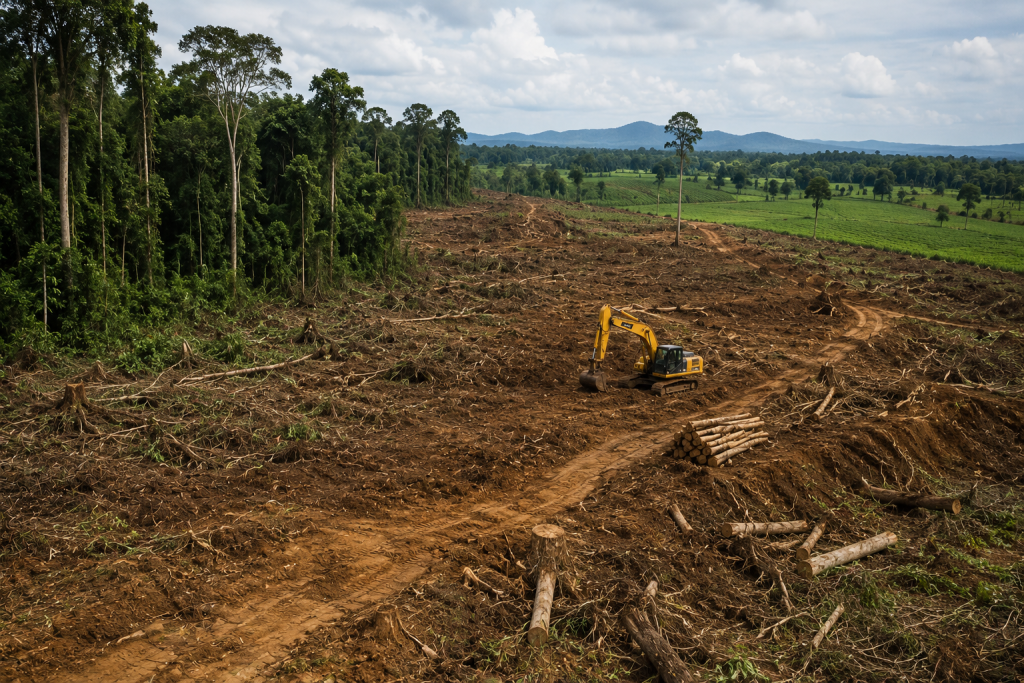
Image: AI-Generated Illustration of Land Use Change
This double effect makes land-use change one of the most significant ways agriculture contributes to climate change, particularly in regions experiencing rapid agricultural expansion.
Rice Cultivation
Rice is a staple food for billions of people, but traditional rice farming creates ideal conditions for methane production.
Flooded rice paddies contain very little oxygen, allowing naturally occurring microorganisms to generate methane as organic matter decomposes.
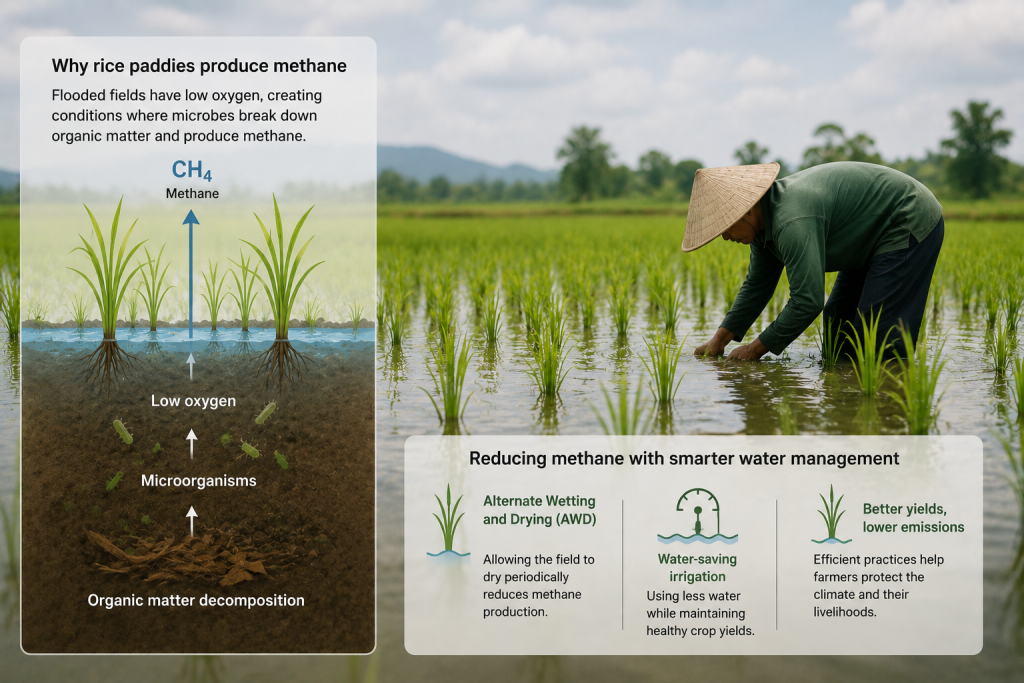
Image: AI-Generated Illustration
Scientists are now developing irrigation and water-management practices that reduce methane emissions while helping farmers maintain stable yields.
Manure Management
Livestock continue to affect the climate even after digestion.
When animal manure is stored in lagoons, pits, or other oxygen-limited environments, it can release methane. Under different storage conditions, it may also produce nitrous oxide. The amount emitted depends largely on how manure is collected, stored, and treated before it is returned to the land.
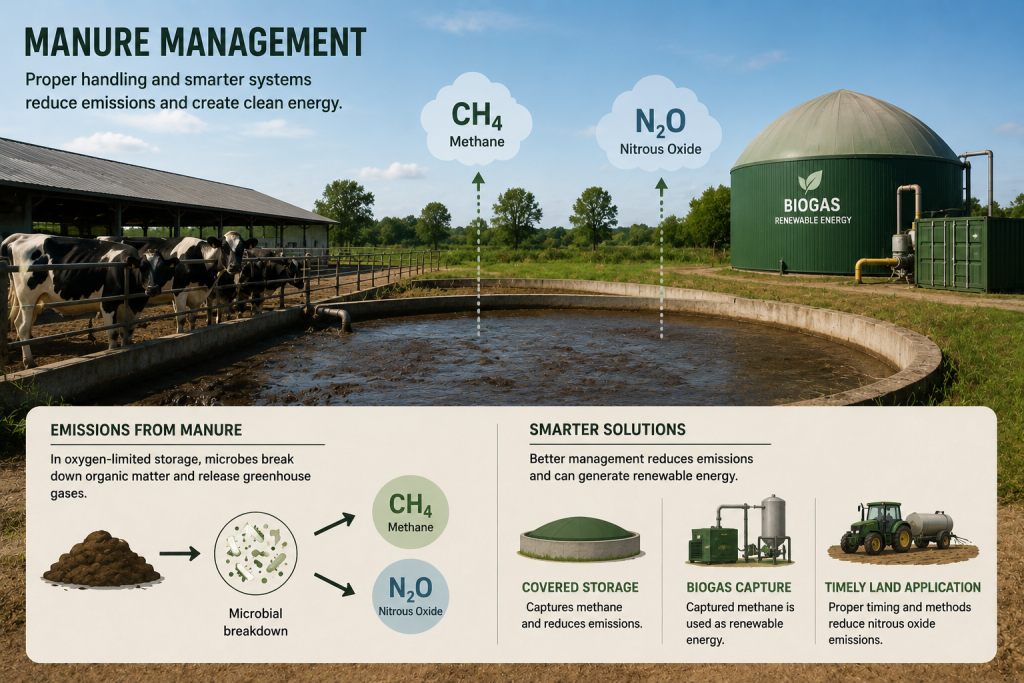
Image: Manure Management in a Nutshell
Modern manure management systems can significantly reduce these emissions, and some farms even capture methane to produce renewable biogas.
Farm Energy, Machinery & Transport
Running a modern farm requires energy long before food reaches a grocery store.
Tractors prepare fields, irrigation pumps supply water, harvesters collect crops, grain dryers preserve harvests, and trucks transport food across supply chains. Most of this equipment still depends on fossil fuels, producing carbon dioxide as it operates.
Although these emissions are generally smaller than methane and nitrous oxide from biological processes, they remain an important part of overall food system emissions and highlight why agriculture’s climate footprint extends beyond the farm itself.
How Climate Change Hits Agriculture Back
So far, we’ve explored how agriculture contributes to climate change. But the relationship doesn’t end there. Climate change is now reshaping agriculture itself, creating a feedback loop where farming both influences and suffers from a warming planet. Here are a few examples of climate change effects in agriculture.
Rising Temperatures
Higher temperatures place crops and livestock under increasing stress. Heat can slow plant growth, reduce crop yields, and make some regions less suitable for crops that have been grown there for generations.
Livestock are affected as well. Heat stress can reduce feed intake, slow growth, lower milk production, and even affect reproductive performance. As heat waves become more common, farmers face greater challenges in maintaining healthy and productive animals.
Drought and Erratic Rainfall
Water has always been one of agriculture’s most important resources, but climate change is making it far less predictable.
Some regions are experiencing longer and more severe droughts, while others face delayed rainy seasons or shorter growing periods. In contrast, certain areas are seeing heavier rainfall and more frequent flooding. Both extremes can damage crops, delay planting, reduce harvests, and increase production costs.
Extreme Weather Events
Climate change is increasing the frequency and intensity of many extreme weather events, including heat waves, floods, hurricanes, wildfires, and powerful storms.
These events can wipe out crops within hours, damage irrigation systems and farm infrastructure, kill livestock, and interrupt transportation networks that move food from farms to markets. Recovery often takes months or even years, especially for smaller farming communities.
Pest and Disease Shifts
Warmer temperatures are allowing many insects, weeds, and plant diseases to spread into areas where they previously could not survive.
As a result, farmers may encounter new pest outbreaks, emerging crop diseases, and greater pressure to control invasive species. These challenges can reduce yields, increase production costs, and make crop management more difficult.
Yield Declines and Food Security Risks
As climate conditions become less stable, many scientists expect yields of important crops to decline in some parts of the world. Lower production affects more than individual farms – it can influence food prices, household incomes, and the stability of entire food systems.
Developing countries often face the greatest risks because agriculture supports millions of jobs and remains a major source of income. When harvests fail, the effects can quickly spread to local economies and national food security.
Smallholder Farmers Face the Greatest Burden
Among all farming communities, smallholder farmers are often the most vulnerable to climate change.
Many have limited access to irrigation, crop insurance, climate forecasting tools, and financial resources that could help them adapt. Without these safeguards, even a single drought, flood, or failed harvest can threaten both their livelihoods and their food supply, making climate resilience an increasingly urgent priority.
How Agriculture Can Reduce Its Climate Impact
We’ve looked at how agriculture contributes to climate change and how climate change affects agriculture in return. The encouraging part is that many of these emissions can be reduced without sacrificing food production. Let’s take a look at a few promising solutions.
Climate-Smart & Regenerative Agriculture
One of the most promising approaches is climate-smart agriculture, which aims to produce more food while reducing greenhouse gas emissions and helping farms adapt to changing weather conditions.
A closely related approach is regenerative agriculture, which focuses on improving soil health, increasing biodiversity, and restoring natural ecosystem functions. Practices such as crop rotation, better soil management, water conservation, and precision farming help create healthier farmland while reducing environmental impacts over time.
Soil Carbon Sequestration & Cover Cropping
Healthy soil does much more than support plant growth. It also acts as a natural carbon sink.
Practices such as planting cover crops, reducing tillage, applying compost, and integrating trees into farmland help store more carbon below ground. At the same time, these methods improve soil structure, increase water retention, and make farmland more resilient during droughts and heavy rainfall.
Precision Fertilizer & Nitrogen Management
Applying fertilizer more precisely can significantly reduce emissions while maintaining crop yields.
Modern farming technologies allow growers to match fertilizer applications to the exact needs of their crops. Soil sensors, GPS-guided equipment, and data-driven decision tools help farmers avoid applying more nitrogen than plants can use, reducing both fertilizer waste and nitrous oxide emissions.
Improved Livestock, Feed & Manure Practices
Reducing livestock emissions does not necessarily mean reducing livestock production. In many cases, better management can make a meaningful difference.
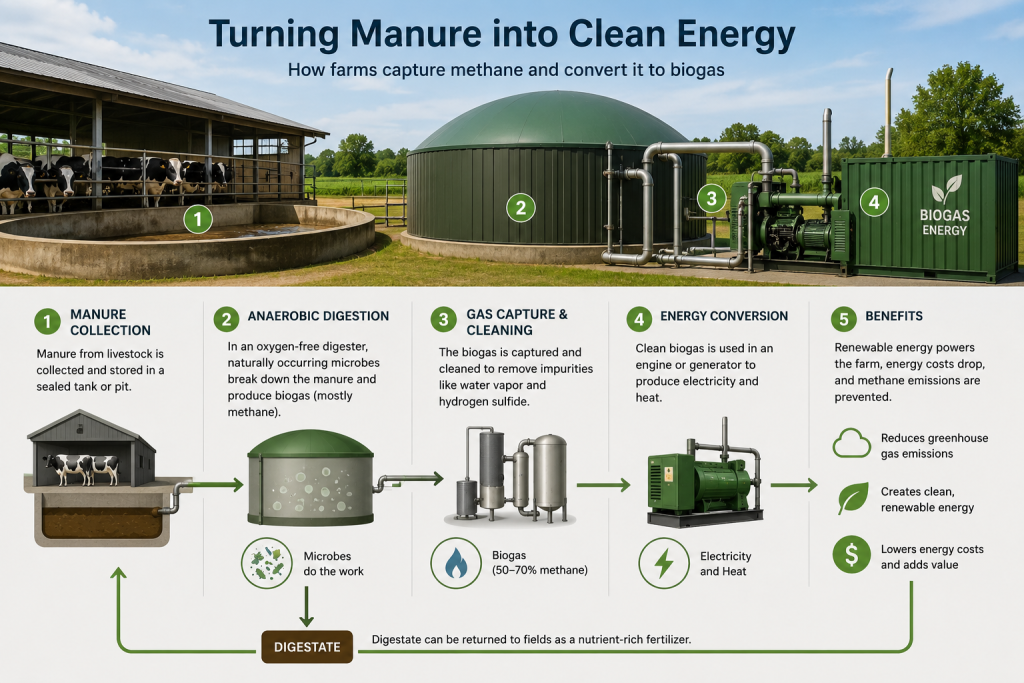
Image: AI-Generated Illustration
Improved feed quality, selective breeding, rotational grazing, feed additives, and modern manure management systems all help lower methane emissions. Some farms also capture methane from stored manure and convert it into biogas, creating a renewable source of energy instead of allowing the gas to escape into the atmosphere.
Reducing Food Waste & Dietary Shifts
Not every climate solution starts on the farm.
A significant portion of the food produced each year is never eaten. But apparently, this is one of the biggest effects on agriculture due to climate change. Reducing food waste throughout production, transportation, retail, and households can lower the overall climate footprint of the food system.
In some regions, gradually shifting toward less emissions-intensive diets can also help reduce greenhouse gas emissions while supporting healthier and more sustainable food systems.
Policy, Carbon Markets & Technology
Many agricultural climate solutions depend on support beyond individual farms.
Governments, research institutions, and private companies are investing in carbon markets, climate incentive programs, renewable energy projects, methane-reduction technologies, and agricultural research. As innovation continues, new technologies are expected to help farmers increase productivity while reducing agriculture’s contribution to climate change.
Keep Learning With Soluta
Climate change and sustainable agriculture are evolving fast. Stay ahead with practical insights, industry updates, and emerging climate technologies – all in one place.
Download the Soluta AppFrequently Asked Questions
How much does agriculture contribute to climate change?
The answer depends on the boundary being measured. Direct agricultural activities account for a significant share of global greenhouse gas emissions, while broader food-system estimates often range from approximately 21% to 37% of total emissions.
What is the biggest source of agricultural emissions?
Methane from livestock, particularly cattle, is one of the largest agricultural emission sources globally. However, fertilizer-related nitrous oxide and emissions from deforestation and land-use change also contribute substantially, depending on the region and accounting framework used.
Is agriculture worse than fossil fuels for the climate?
No. Fossil fuel combustion remains the largest source of global greenhouse gas emissions. Agriculture is a major contributor, but it does not exceed emissions from energy production, transportation, industry, and fossil fuel use combined.
What is climate-smart agriculture?
Climate-smart agriculture refers to farming approaches that improve productivity, increase resilience to climate impacts, and reduce greenhouse gas emissions. It combines sustainable land management, improved technologies, and adaptive farming practices.
Can farming become carbon negative?
In some cases, agricultural systems may remove more carbon from the atmosphere than they emit through practices such as agroforestry, soil carbon sequestration, and regenerative land management. Achieving carbon-negative outcomes at large scales remains challenging but is an active area of research and innovation.
Conclusion
The relationship between farming and the climate is complex, interconnected, and increasingly important. Agriculture contributes to greenhouse gas emissions through livestock production, fertilizer use, land-use change, and energy consumption.
At the same time, farmers are among the first to experience the consequences of a warming planet. Understanding agriculture impact on climate change requires looking beyond a single emissions figure and recognizing the broader food-system context. With climate-smart practices, technological innovation, and better land stewardship, agriculture can become not only part of the problem but also a significant part of the solution.